[Blog Details]
What are the Core Values of Your Business?
[Blog Details]
What are the Core Values of Your Business?
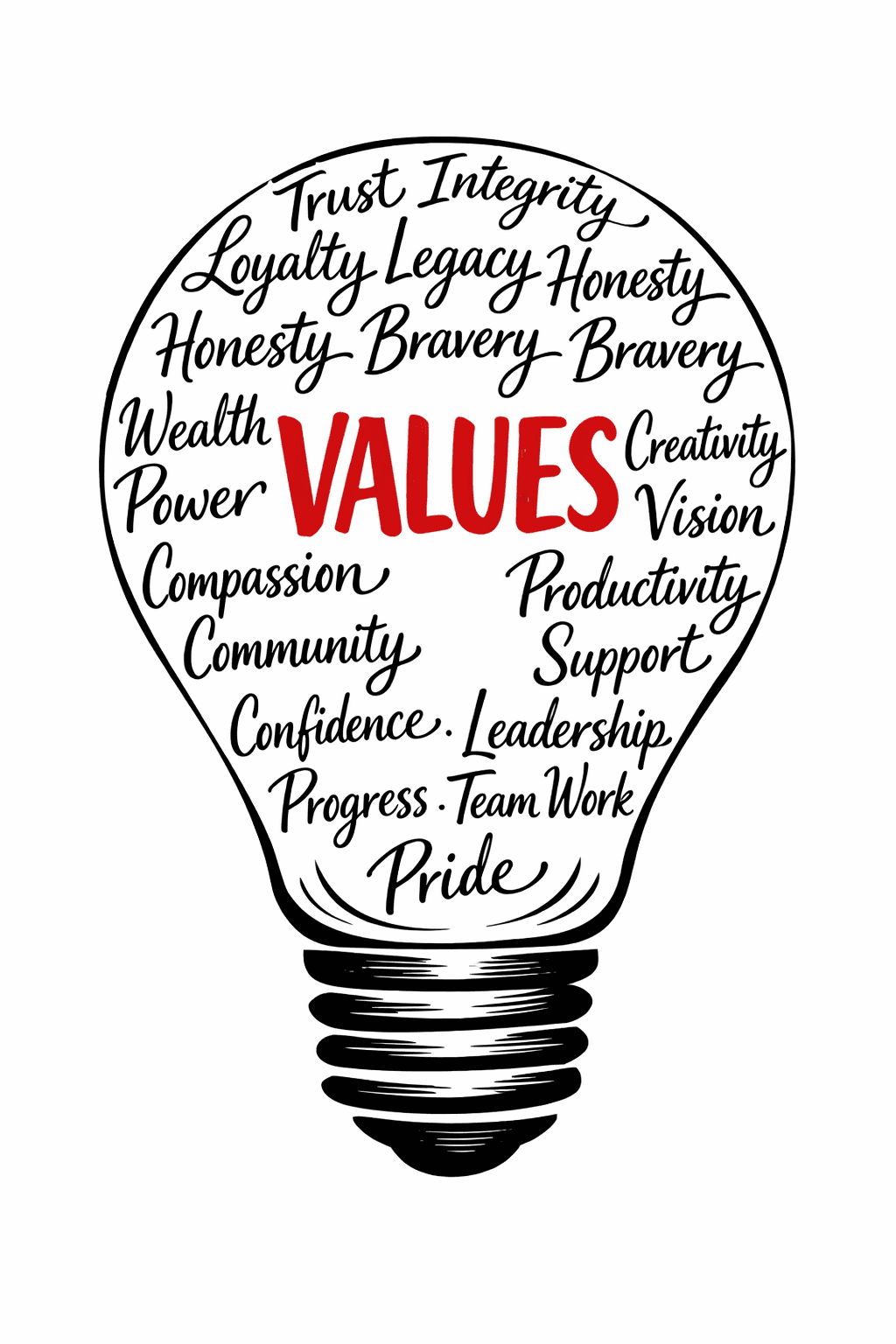
I love looking at the definition of a word when it comes to writing about a topic because there is usually something that stands out to me. Something simple that reminds me why the concept is important.
The word “value” is no exception. There is more to the definition than this (check Google if you are curious), but here’s what jumped off the page atI love looking at the definition of a word when it comes to writing about a topic because there is usually something that stands out to me. Something simple that reminds me why the concept is important.
The word “value” is no exception. There is more to the definition than this (check Google if you are curious), but here’s what jumped off the page at

Karen Kersey
Kerage founder, Karen Kersey, writes for our partner vNacelle, a strategic consulting firm committed to growing, reigniting and empowering the entrepreneurial spirit in all of us.
val·ue One's judgment of what is important.
Sounds important to understand what we judge as important, doesn’t it?
So why are some businesses, and people, so resistant to a question like this? The dreaded values question leads business leaders and individuals to say, “ugh”, “it’s too soft and fluffy”, or “we don’t need to look at stuff like that, people just need to do their job.” Agreed, that sounds great. But what happens when we all have our own judgment of what is important? Will we be able to match what I think is important for the business, important in our jobs, and important in our lives, with what you think is important?
Sounds like the recipe for an avoidable breakdown to me.
There is nothing quite like a rapid period of growth, in life or in business, to help you recognize the importance of your values. We can achieve better understanding of our values through times where we are learning. If our values define what is important to us, they also give us an indication of what is desirable and undesirable for each of us. That means if I don’t like what is happening around me, there’s a good chance it doesn’t align with something that is important to me: my values. When I do like what’s going on, I am probably in alignment with my values.
When we pay attention and get comfortable with naming what we truly value, we can start to coordinate more of what we want, and move away from what we don’t. Values help us to be able to understand what drives behavior, which also increases our chances of motivating it.
Values tell people what our judgment of “good” looks like; for you and the business. Knowing that can help guide decision making more efficiently than any manual or policy. Neglecting values in the creation of policy and procedure is often where things go wrong. It’s usually what is missing in the worst customer service experience you have ever had; where the person “serving” you knew the policy but struggled to resolve the issue in a manner that you would appreciate. They could reference the page and section in the manual, but they didn’t understand or connect with what made that policy important. What was that policy created to protect?
Our resistance to exploring values could be linked to a subconscious mindset that the exercise of understanding and articulating values is complicated. It might also be linked to some expectation we carry that we better get it “right” (i.e.; do it once and never have to talk about it again). Unfortunately, the only way that could be possible is if things are going to remain static; and in this world and our interactions with people, I don’t think that is a realistic expectation.
Strategic Insights That Drive Business Success
Strategic Insights That Drive Business Success
Strategic Insights That Drive Business Success